
Why Proper Biomedical Waste Disposal Is Critical
Biomedical waste is not ordinary waste. It includes infectious materials, sharps, contaminated disposables, and pathological waste that can cause serious health risks if mishandled. Improper disposal exposes healthcare workers, waste handlers, patients, and the public to infections and injuries while also violating government regulations.
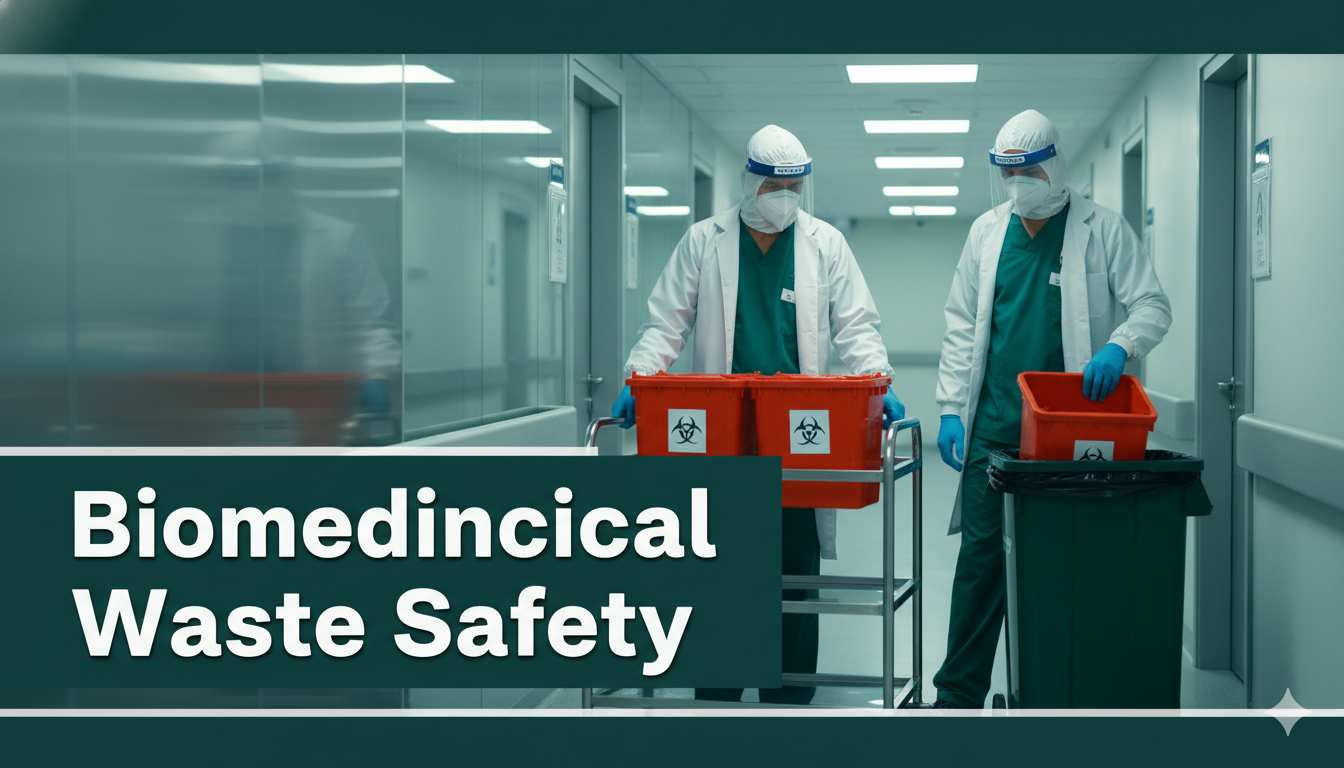
Healthcare facilities generate large volumes of biomedical waste daily. Without proper segregation at the source, this waste can mix with general waste, increasing the risk of contamination. Color-coded segregation, approved containers, and trained handling staff are the foundation of safe biomedical waste management.
Transportation is another critical stage. Biomedical waste must be collected on a fixed schedule using authorized vehicles that prevent leakage, spillage, or exposure. Delays or unsafe transport practices can result in bacterial growth, foul odors, and public health hazards.
Treatment and disposal methods such as autoclaving, incineration, or chemical treatment are designed to neutralize infectious agents. These processes must be carried out only at approved facilities following prescribed standards. Any shortcut taken during this stage creates long-term environmental and health consequences.
Regulatory compliance is not optional. Government authorities require proper documentation, tracking, and reporting of biomedical waste. Non-compliance can lead to heavy penalties, legal action, and loss of operating licenses for healthcare institutions.
Professional biomedical waste management partners ensure that every stage—from segregation to final disposal—is handled responsibly. By choosing compliant waste management services, healthcare facilities protect their staff, patients, and the environment while maintaining legal and ethical standards.